
Choosing the right waste setup may not be the first thing people think about when designing a kitchen, but it has a big impact on how the space feels and functions every day. A kitchen bin is used constantly — while preparing food, cleaning dishes, unpacking groceries, wiping benches, and sorting recycling. If the bin is poorly placed or not suited to the kitchen layout, it can quickly become frustrating.
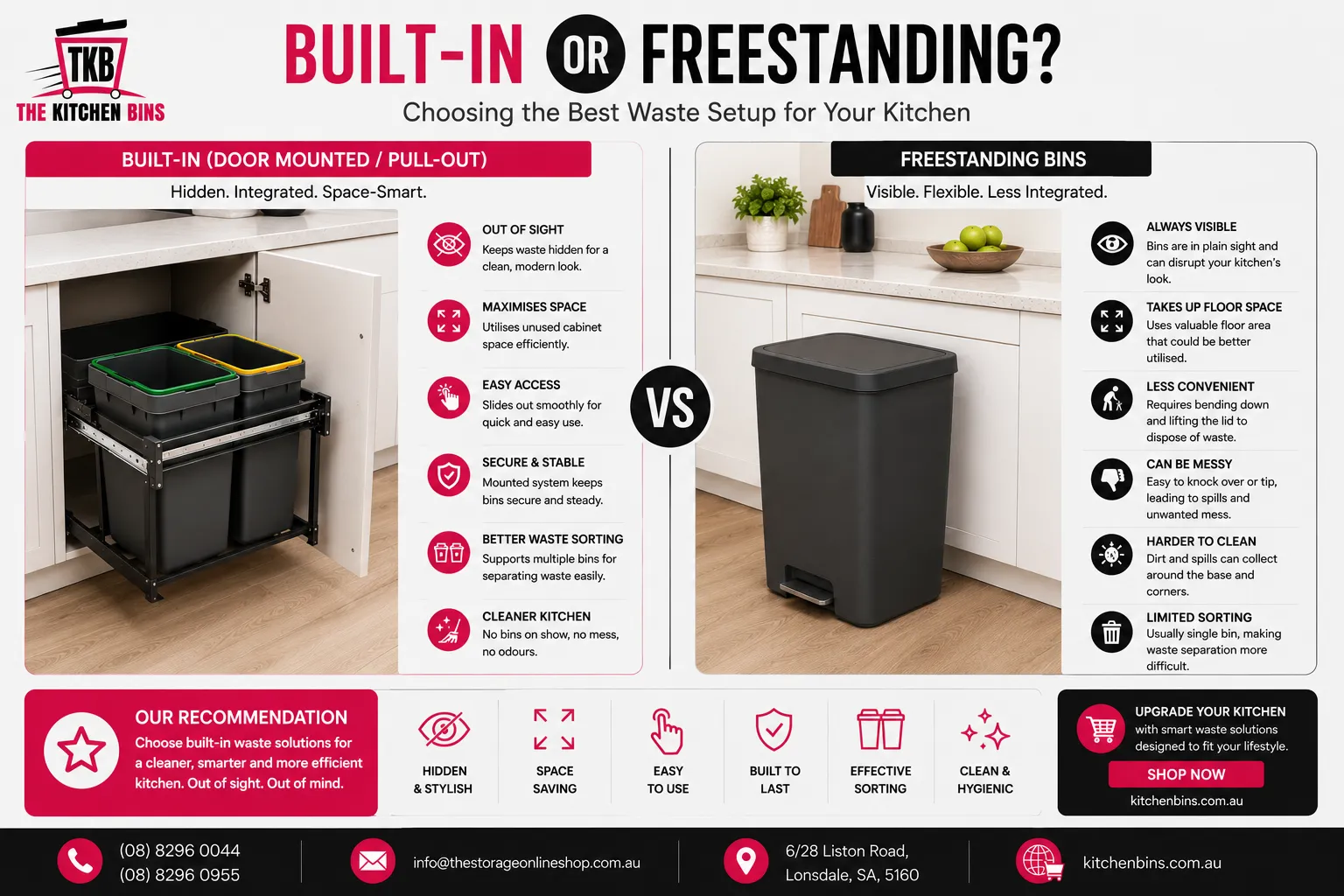
Many homeowners compare two common options: built-in bins and freestanding bins. A freestanding kitchen rubbish bin sits openly on the floor, while built-in kitchen cabinet bins are hidden inside cupboards or drawers. Both options can work well, but the best choice depends on your kitchen size, storage needs, household habits, and design preferences.
For modern Australian homes, built-in kitchen bins are becoming a popular choice because they keep waste hidden, save floor space, and create a cleaner kitchen finish. However, freestanding bins still suit some situations, especially where installation is not possible.
This guide will help you understand the difference between built-in and freestanding waste setups so you can choose the right solution for your kitchen.
Why Your Kitchen Waste Setup Matters
A bin is not just a container for rubbish. It is part of the kitchen workflow. When it is placed well, daily tasks feel easier. When it is in the wrong spot, it can get in the way, create clutter, and make the kitchen harder to clean.
The right waste setup can help you:
-
Keep rubbish out of sight
-
Save valuable floor space
-
Improve hygiene
-
Make recycling easier
-
Support a cleaner kitchen design
-
Reduce unnecessary movement while cooking
-
Create a more organised home
This is especially important in open-plan kitchens, apartments, renovated homes, and compact layouts where every detail matters.
What Is a Built-In Kitchen Bin?
A built-in kitchen bin is installed inside a cabinet, cupboard, drawer, or door-mounted frame. Instead of sitting openly on the floor, it stays hidden behind the kitchen cabinetry.
Built-in kitchen cabinet bins are available in different styles, including pull-out bins, under-sink bins, door-mounted bins, and drawer-integrated systems. Some are designed for compact cupboards, while others suit larger cabinets with multiple compartments for rubbish and recycling.
Common Built-In Bin Styles
Popular built-in waste systems include:
-
Pull-out kitchen bins
-
Under-sink bins
-
Door-mounted bins
-
Double-bin systems
-
Soft-close cabinet bins
-
Drawer-integrated bins
-
Replacement bucket systems
These options are ideal for homeowners who want their kitchen to look clean, organised, and uncluttered.
What Is a Freestanding Kitchen Bin?
A freestanding bin is a standalone bin that sits on the kitchen floor. It does not need to be installed inside a cabinet. You can place it beside a bench, near the sink, next to the fridge, or in a corner.
A freestanding kitchen rubbish bin is often chosen because it is simple, movable, and easy to replace. It can work well in rental homes, temporary kitchens, laundry areas, offices, or kitchens without available cabinet space.
Common Freestanding Bin Styles
Freestanding bins may include:
-
Pedal bins
-
Touch-top bins
-
Sensor bins
-
Slimline bins
-
Stainless steel bins
-
Plastic kitchen bins
-
Dual-compartment freestanding bins
While they are practical in some situations, they may not always suit kitchens where space, appearance, and hidden storage are priorities.
Built-In vs Freestanding Kitchen Bins
Both built-in and freestanding bins have advantages. The right choice depends on how your kitchen is used and what matters most to your household.
|
Feature |
Built-In Kitchen Bins |
Freestanding Kitchen Rubbish Bin |
|
Appearance |
Hidden inside cabinet |
Visible in the kitchen |
|
Space saving |
Excellent |
Uses floor space |
|
Installation |
Requires cabinet fitting |
No installation needed |
|
Hygiene |
Waste area is contained |
Floor area may collect spills |
|
Flexibility |
Fixed position |
Easy to move |
|
Best for |
Modern kitchens and renovations |
Rentals or temporary setups |
|
Recycling options |
Available in single, double, or triple systems |
Depends on bin model |
A freestanding bin is easy to use, but built-in kitchen bins often provide a more polished and space-saving result.
When Built-In Kitchen Cabinet Bins Are the Better Choice
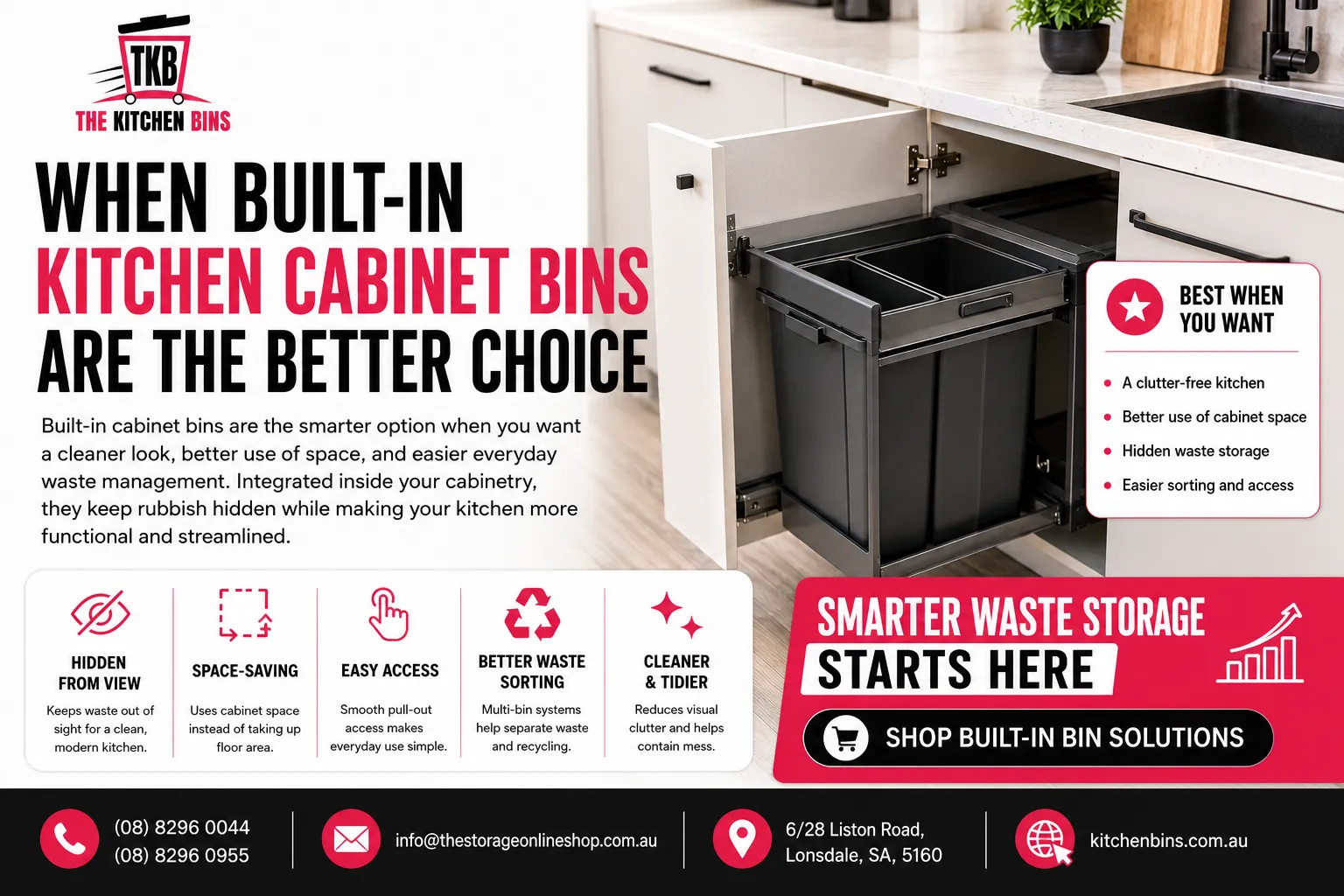
Built-in waste systems are ideal when you want the kitchen to feel cleaner, more organised, and more modern. They are especially useful in homes where the kitchen is visible from the living or dining area.
You Want a Cleaner Kitchen Look
A visible bin can interrupt the appearance of a stylish kitchen. Even if the bin is modern, it still takes attention away from the cabinetry, benchtops, and overall design.
Built-in kitchen cabinet bins keep rubbish hidden behind a door or drawer front. This creates a more streamlined look and helps the kitchen feel less cluttered.
You Have Limited Floor Space
In compact kitchens, floor space is valuable. A freestanding bin can block movement or make the room feel smaller. A built-in bin uses cupboard space instead, leaving the floor clear.
This is useful for:
-
Apartments
-
Townhouses
-
Galley kitchens
-
Small family homes
-
Butler’s pantries
-
Renovated compact kitchens
You Want Better Waste Separation
Many built-in systems include two or more compartments. This makes it easier to separate general waste, recycling, and food waste without placing several bins around the kitchen.
For busy households, this can make daily waste management much easier.
You Are Renovating Your Kitchen
If you are already renovating, it is the perfect time to plan a built-in waste system. A cabinet maker or installer can allow space for a pull-out or drawer-integrated bin from the beginning.
Planning early helps avoid awkward placement later.
When a Freestanding Bin May Still Make Sense
Built-in systems are practical, but they are not the only option. A freestanding kitchen rubbish bin may still be suitable in certain situations.
You Are Renting
If you are renting and cannot modify cabinets, a freestanding bin may be the easiest choice. It requires no installation and can move with you when you change homes.
Your Cabinets Are Too Small
Some kitchens do not have enough internal cabinet space for a built-in bin. Plumbing, narrow cupboards, or unusual cabinetry can limit your options.
In this case, a slim freestanding bin may be more practical.
You Need a Temporary Solution
If you are waiting for a renovation or replacing an old kitchen soon, a freestanding bin can work as a short-term solution.
You Want Maximum Flexibility
A freestanding bin can be moved around depending on how you use the kitchen. This can be useful in shared spaces, commercial areas, or multi-purpose rooms.
Choosing the Right Bin for Your Household
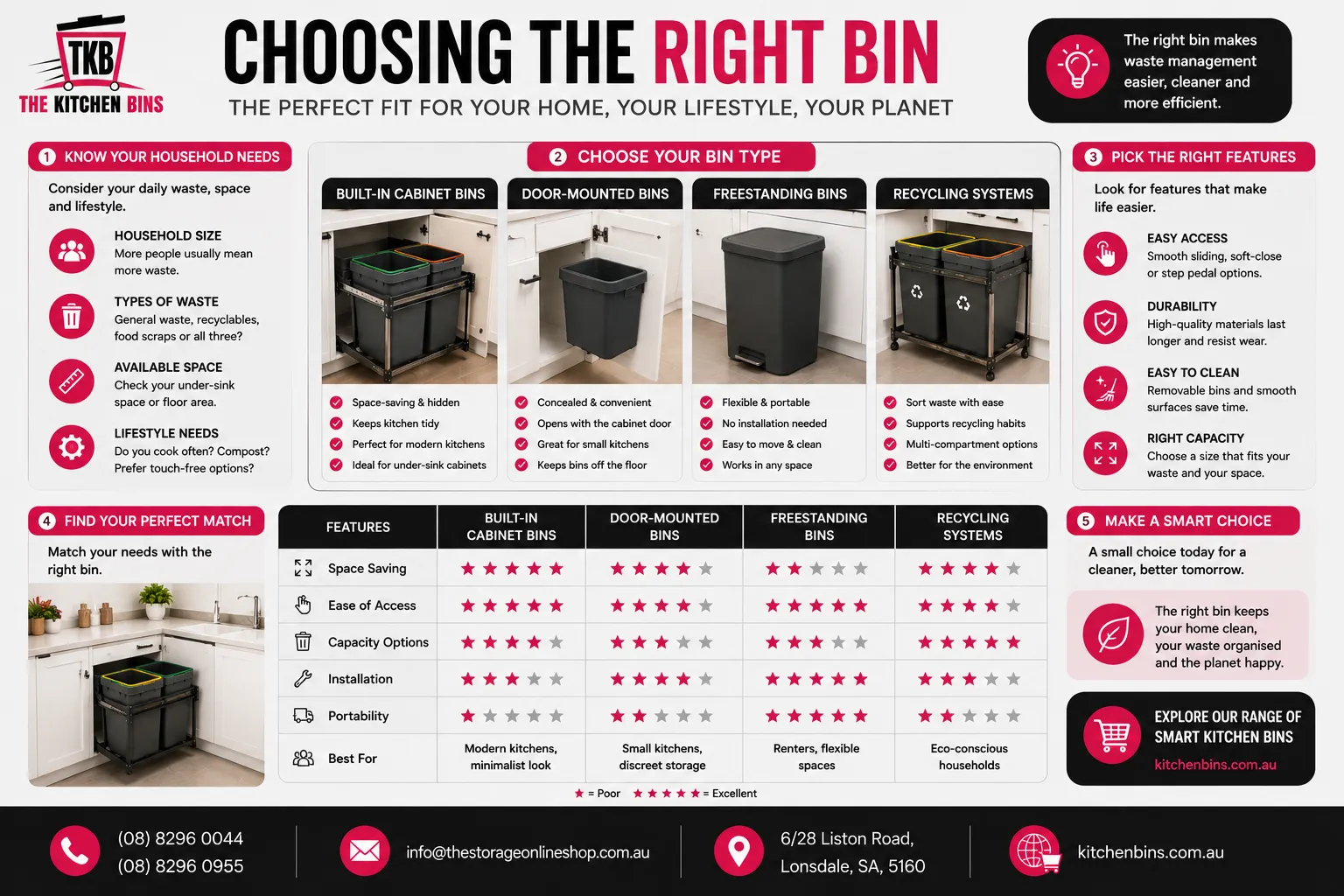
Before choosing between built-in and freestanding kitchen bins, think about your household size, cooking habits, and available space.
|
Household Need |
Best Bin Setup |
Why It Works |
|
Small apartment |
Compact built-in or slim freestanding bin |
Saves space |
|
Couple who cooks often |
15–20L built-in bin |
Practical daily capacity |
|
Family kitchen |
Double built-in bin |
Supports waste and recycling |
|
Rental home |
Freestanding bin |
No cabinet changes needed |
|
Renovated kitchen |
Pull-out cabinet bin |
Clean, modern finish |
|
Recycling-focused home |
Double or triple cabinet bin |
Easier waste separation |
The best bin is not always the biggest one. It should fit your kitchen, suit your habits, and be easy to use every day.
Important Features to Compare
When comparing built-in and freestanding options, look beyond appearance. A good bin should be practical, durable, and easy to maintain.
Capacity
Capacity should match how much waste your household creates. A small household may only need a compact bin, while a family may require a larger system.
KitchenBins.com.au offers options across different capacity ranges, from smaller bins for compact homes to larger systems for family kitchens.
Ease of Cleaning
Bins should be easy to empty and clean. Removable buckets are especially useful in built-in systems because they allow you to lift the container out, replace bags, and rinse the bucket when needed.
Access
A bin should be easy to reach when cooking or cleaning. Built-in bins are often installed near the sink, dishwasher, or preparation area for better workflow.
Cabinet Fit
If you are choosing kitchen cabinet bins, measure the internal cabinet width, height, and depth carefully. Also check hinges, plumbing, and drawer clearance before buying.
Build Quality
Strong runners, sturdy frames, and quality buckets matter, especially for bins used multiple times a day. A well-built system should feel smooth and stable during everyday use.
Kitchen Bins Waste Setup Options
Kitchen Bins is an Australian online store focused on practical, space-saving kitchen waste solutions. Their range includes built-in systems, pull-out bins, under-sink bins, cabinet bins, freestanding options, replacement buckets, and accessories for different kitchen layouts.
Product Range
KitchenBins.com.au offers:
-
Pull-out kitchen bins
-
Under-sink bins
-
Door-mounted kitchen bins
-
Freestanding kitchen bins
-
Double-bin systems
-
Triple-bin systems
-
Replacement buckets
-
Bin lids and accessories
-
Options by cabinet width
-
Options by capacity
-
Brands such as Wesco, Kia Ora, Hailo, Hafele, and Blum
This makes it easier for homeowners, renovators, and installers to find a waste setup that suits the kitchen rather than forcing a generic bin into the space.
Why Choose Kitchen Bins?
Kitchen Bins is a strong choice for homeowners who want more than a basic floor bin. The website focuses specifically on kitchen bin solutions, which means customers can browse products designed for cabinet storage, hidden waste, and everyday kitchen use.
Key advantages include:
-
A specialised range of kitchen waste systems
-
Options for compact and larger kitchens
-
Built-in solutions for modern cabinetry
-
Capacity choices for different households
-
Waste and recycling separation options
-
Replacement buckets for existing systems
-
Australia-wide online shopping
-
Practical options for renovations and upgrades
Instead of choosing a general bin from a homeware aisle, customers can find waste systems designed to work with Australian kitchen cabinetry and daily household routines.
Practical Buying Tips Before You Decide
Before choosing your bin setup, take time to understand your space and how your kitchen is used.
Look at Your Kitchen Layout
Think about where most waste is created. For many homes, this is near the sink, dishwasher, or main preparation bench.
Check Your Cabinet Space
If you want built-in kitchen cabinet bins, measure carefully. A few millimetres can make a difference, especially around hinges and plumbing.
Consider Rubbish and Recycling
If you want to separate waste, choose a double or triple system. This can reduce clutter and make recycling easier.
Think About Long-Term Use
A bin is opened many times a day. Smooth access, strong construction, and easy cleaning are worth considering before buying.
Conclusion
Both built-in and freestanding bins can work, but they serve different needs. A freestanding kitchen rubbish bin is simple, movable, and useful where installation is not possible. However, built-in kitchen bins offer a cleaner, more space-saving, and more modern solution for many homes.
For compact kitchens, open-plan layouts, and renovations, kitchen cabinet bins are often the better choice because they hide waste, free up floor space, and support better organisation. They help the kitchen look cleaner while making everyday rubbish disposal more convenient.
KitchenBins.com.au offers a wide range of kitchen waste solutions for Australian homes, including pull-out bins, under-sink bins, door-mounted bins, freestanding bins, replacement buckets, and accessories. Whether you need a simple bin upgrade or a complete built-in waste system, choosing the right setup can make your kitchen cleaner, smarter, and easier to use every day.